The Traditional Method Behind Wente’s 2019 Brut Reserve:
How Sparkling Wine Is Made
The Traditional Method Behind Wente’s 2019 Brut Reserve:
How Sparkling Wine Is Made
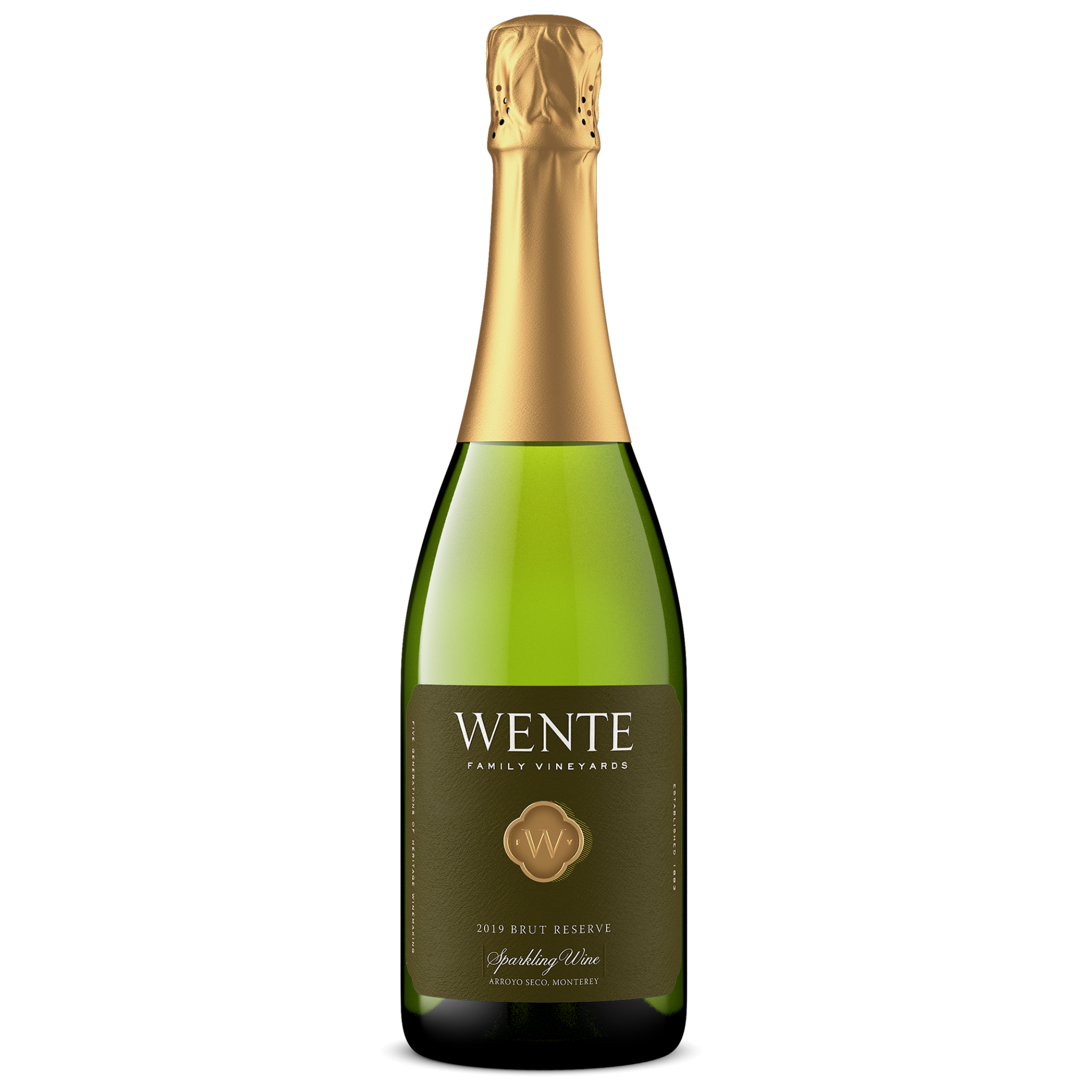
For more than 140 years, Wente Family Vineyards has crafted wines rooted in patience, precision, and a deep respect for the estate vineyards that define our legacy. That same philosophy guides our approach to sparkling wine. The 2019 Brut Reserve, made using the Traditional Method (Méthode Traditionnelle), reflects the craftsmanship and time-honored techniques behind the world’s most celebrated sparkling wines.
While sparkling wine may feel effortless in the glass, the process behind each bottle is meticulous and deeply intentional. Here, we walk through each step of the sparkling winemaking process and share how the 2019 Brut Reserve transforms from Chardonnay grapes into an elegant, effervescent wine worthy of any occasion.
1. Pressing: Extracting Pure, Delicate Juice
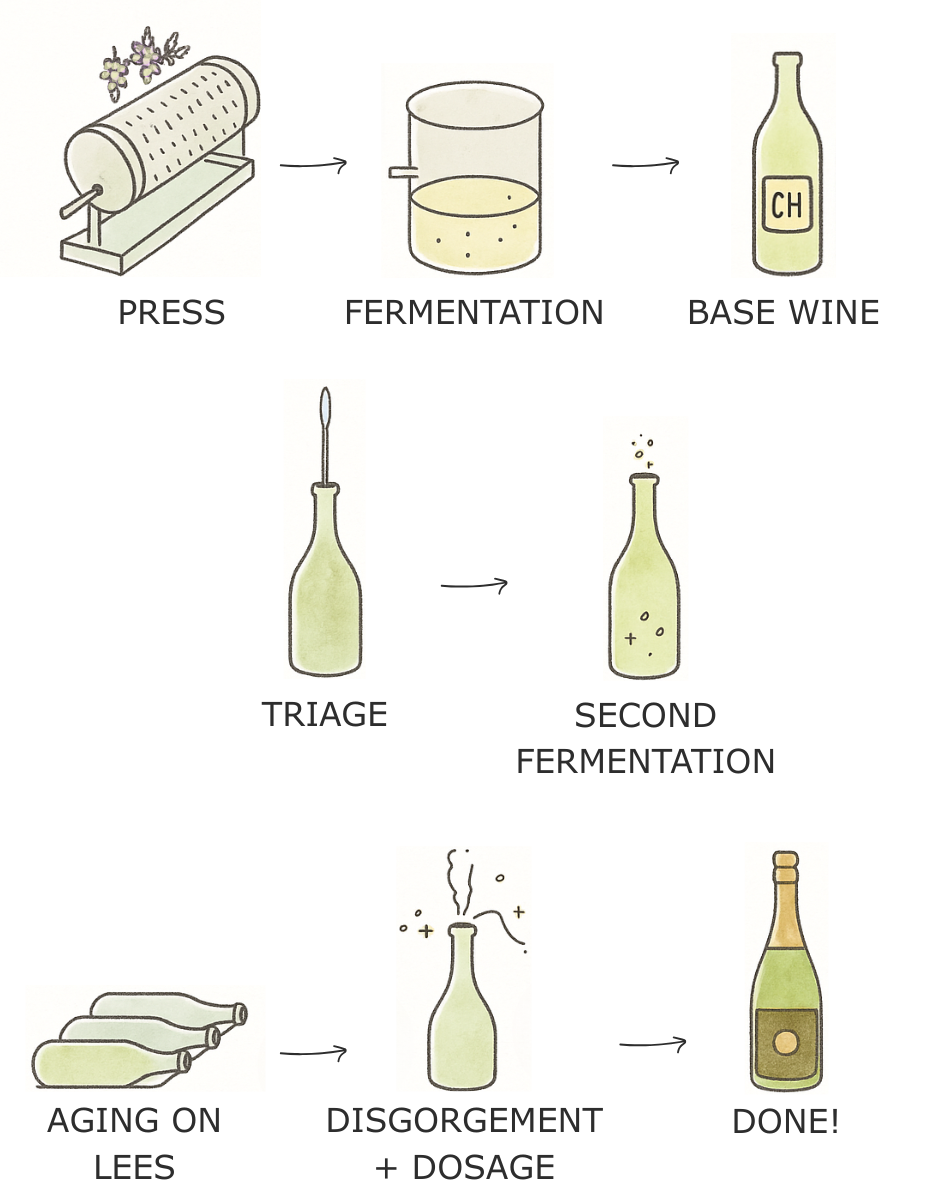
The journey begins with freshly harvested Chardonnay grapes brought directly to the press. Upon pressing, we extract pure, high-quality juice while preserving aromatics and natural freshness. This is the foundation of a refined sparkling wine.
2. Primary Fermentation: Creating the Base Wine
Next, the juice undergoes primary fermentation, where yeast converts natural sugars into alcohol. The result is a still, dry wine, known as the base wine. For the 2019 Brut Reserve, this base wine is crafted entirely from Chardonnay, chosen for its structure, vibrancy, and ability to age gracefully on lees.
3. Tirage: The Start of the Sparkle
To transform the base wine into sparkling wine, we perform tirage, a mixture of yeast and sugar is added before bottling. This is the catalyst for the second fermentation, the stage responsible for the fine bubbles that define Traditional Method sparkling wine.
4. Second Fermentation: Bubbles Form in the Bottle
Once sealed, each bottle becomes its own miniature fermenter. Inside, the yeast consumes the added sugar and releases carbon dioxide, which remains trapped in the wine. This slow, natural buildup of pressure creates the delicate effervescence that makes sparkling wine so distinctive.
This step is entirely bottle-driven—no shortcuts, no external carbonation—just time and patience.
5. Aging on Lees: Developing Texture and Depth
After fermentation, the bottles rest on their lees, or spent yeast cells. Over time, the lees break down and impart deeper texture, mouthfeel, and flavor. This is where the 2019 Brut Reserve truly begins to evolve, developing notes of brioche, citrus, green apple, and a beautifully fine mousse.
Our Brut Reserve spends five years aging on lees, allowing complexity and refinement to build slowly and naturally.
6. Disgorgement: Clarifying the Wine
Once the aging period is complete, the bottles undergo disgorgement, the process of removing the yeast sediment while preserving the clarity and brightness of the wine. This marks the transition from maturation to final balance.
7. Dosage: The Final Touch
After disgorgement, a small amount of wine and sugar, known as dosage, is added to shape the final style and balance. For the 2019 Brut Reserve, the dosage is carefully calibrated to lift the aromatics and ensure a harmonious expression of fruit, acidity, and texture.
The result is a sparkling wine that is elegant, structured, and vibrant.
8. The Finished Wine: 2019 Brut Reserve
The final step is simple: the wine is corked, caged, labeled, and ready to be enjoyed!